Specialist Dry Eye, Red Eye, MGD and Blepharitis Clinic
One clinic for every dry eye treatment
One of the UK’s most comprehensive dry eye clinics, offering innovative treatment pathways and top-of-the-line eye care under one roof.
Every plan begins with a thorough dry eye assessment, so nothing is recommended until we understand exactly what is driving your symptoms.
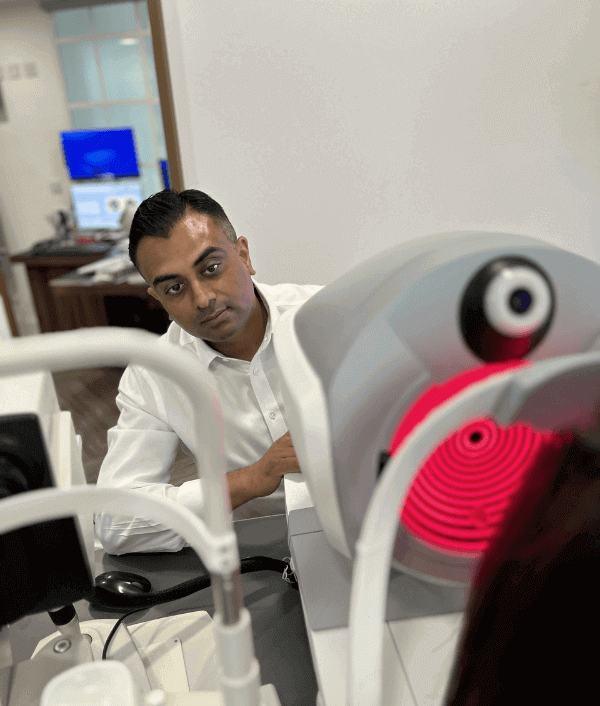
Led by Therapeutic Optometrist Sachin Patel, our St John’s Wood clinic offers the full spectrum of modern dry eye treatment under one roof:
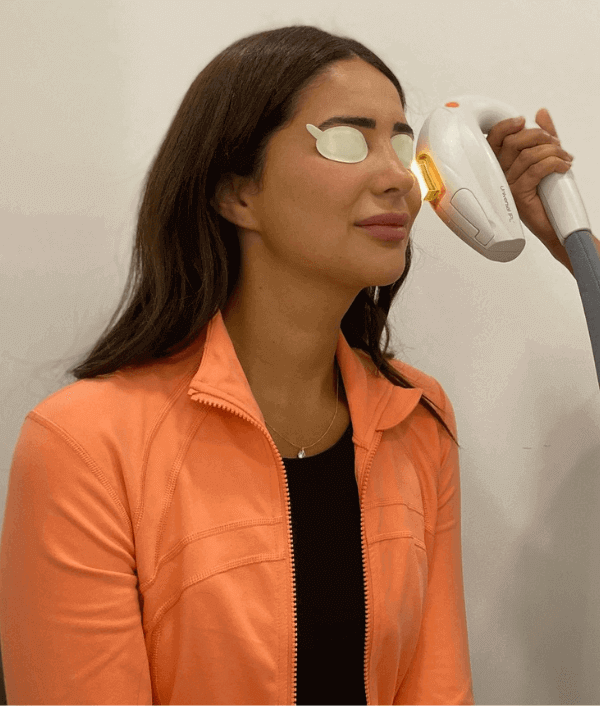
- Lumenis OptiLight Intense Pulsed Light (IPL)
- OptiLIFT DMST (Dynamic Muscle Stimulation) and radiofrequency
- Meibomian gland probing
- Meibomian gland expression
- Low-level light therapy (red, polarised, blue and yellow)
- BlephEx and ZEST lid cleansing
- Amniotic membrane lenses
- Prescription-only medication
- Punctal plugs or Lacrifill
Most patients reach us after other clinics have tried one or two treatments without success, with some travelling across the globe just to see us.
This is where we genuinely excel.
Speak to Our Team
· Technology Practice of the Year, Optician Awards 2024 ·
· Featured on Top Doctors · Ophthalmologist-referred for dry eye and dry AMD ·
Multi-award-winning independent practice
One of only a handful of UK clinics offering meibomian gland probing
Therapeutic Optometrist on site (able to prescribe medication)
First UK practice to offer OptiLIFT dynamic muscle stimulation
Open 6 days a week, central London
Only FDA-cleared IPL for dry eye (Lumenis OptiLight)
How we help with dry eye issues
You have probably tried drops. You may have tried warm compresses, lid wipes, omega-3 supplements, or even IPL at another clinic, and you are still uncomfortable, despite the time and money already spent.
Dry eye is rarely fixed by a single treatment because it is rarely caused by a single thing.
We see patients who describe:
- Gritty, sandy, or burning eyes that feel worse by the afternoon or with no clear pattern
- Eyes that water constantly
- Redness, tired eyes, or a heavy-lidded feeling
- Blurred vision that clears when you blink
- Contact lenses that used to be comfortable and now are not
- Recurrent styes, chalazia, or chronic blepharitis
- Rosacea, Demodex, or ocular rosacea symptoms
- Dryness following LASIK, cataract surgery, or blepharoplasty
- Symptoms linked to Sjögren’s syndrome, menopause, long screen hours, or certain medications
If any of these symptoms sound familiar, our dry eye assessment is the right starting point. From there, we build a treatment plan that targets every contributing factor, not just the one that is easiest to treat.
Why patients travel to see us
Led by a therapeutic optometrist
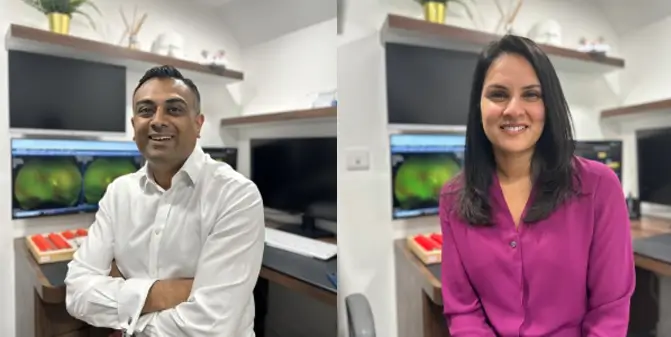
Many “dry eye clinics” run treatments through junior staff or technicians. At Safarian & Simon, your assessment and treatments are carried out by Sachin Patel or Anila Mistry, both featured on Top Doctors.
Sachin is a qualified Therapeutic Optometrist, meaning he can diagnose, prescribe and manage conditions that most opticians must refer elsewhere. He leads technology purchasing for the practice and has built a reputation for adopting genuinely effective new treatments early, often testing them on himself and colleagues before offering them to patients.
Proper dry eye care needs the right diagnostic technology alongside the ability to treat both medically and mechanically. Having the full armoury of equipment counts for little without the clinical knowledge to use it well, and that combination is what the practice is built around.
The full toolkit
Dry eye is multifactorial, so treating it properly takes more than one tool. A clinic offering only IPL, or only drops and warm compresses, is working with one hand tied.
Many patients don’t realise how much more help is available until they come to us. We combine technologies strategically, sequencing them so each one amplifies the next.
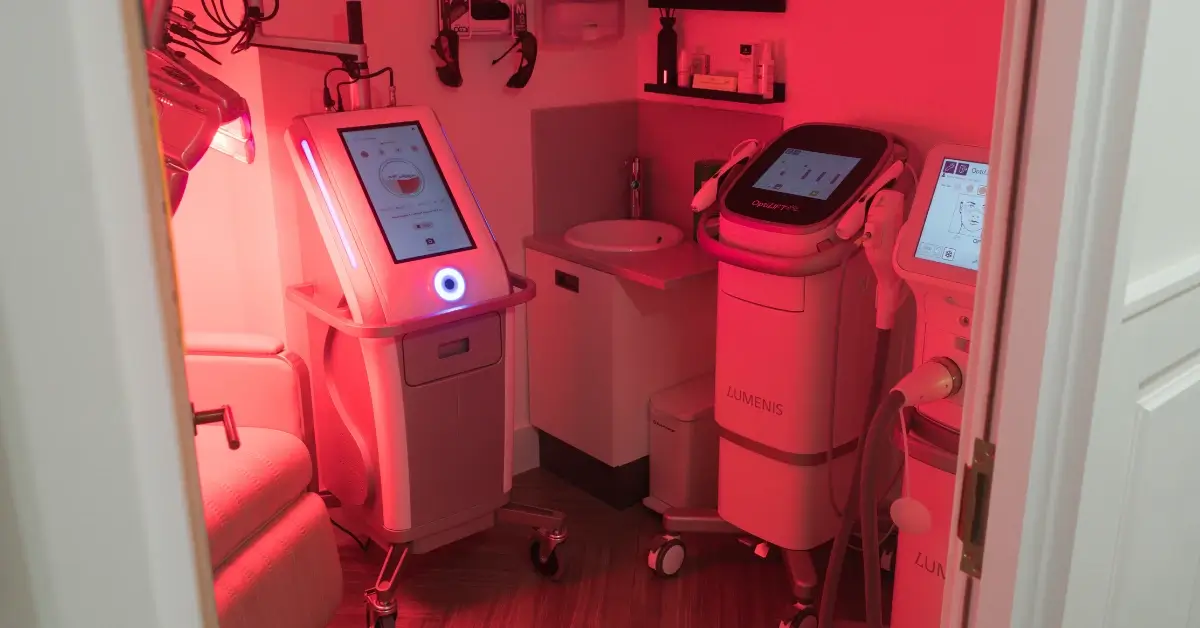
Ophthalmologists refer to us
Consultant ophthalmologists who have worked with this practice for over a decade refer their own patients here for dry eye and dry AMD management. It is an unusually strong signal of trust from the surgical side of the profession.
Independent, single-owner practice
Unlike 50% of “independent” opticians now owned by multi-shareholder groups, we remain a single-owner practice. That means clinical decisions are made in your interest, not a quarterly target, a KPI, or the convenience of a locum.

Our Reviews
Our dry eye treatments
A complete overview of every dry eye treatment available at the clinic. We start with a dry eye assessment, including biological tear sample markers to quantify the severity of inflammation, and build the treatment plan together from there.
Lumenis OptiLight IPL
The only FDA-cleared IPL for dry eye disease, targeting the chronic inflammation behind most MGD, abnormal eyelid blood vessels and Demodex mites. We are among the few UK clinics trained to safely treat the upper eyelids and wider face where appropriate.
Meibomian gland probing
A skilled in-office procedure using a fine 2 to 4mm probe to break down internal scar tissue blocking the meibomian glands. Often the missing piece when IPL, warm compresses and expression have not worked, particularly for patients with a history of Accutane, ocular rosacea, post-LASIK dryness. We are one of only a handful of European clinics offering it.
OptiLIFT (radiofrequency and dynamic muscle stimulation)
The first practice in the UK to offer OptiLIFT. It stimulates the weakened muscles that drive your blink, while radiofrequency improves tear film stability and smooths fine lines. No drops, no surgery, no downtime. Screen use is well documented to reduce your natural blink rate, and like any underused muscle, the muscles behind your blink respond well to being retrained. Find out more about OptiLIFT and how it supports the blink.
Low-level light therapy (LLLT)
Calming eyelid inflammation through photobiomodulation. Useful for blepharitis, chalazia, post-blepharoplasty dryness, rosacea, Demodex, Sjögren’s, and before or after cataract or refractive surgery. We use red and infrared light to support cellular energy and oil production, blue light to help target bacteria, and yellow light to help calm inflammation and swelling.
BlephEx and ZEST eyelid cleansing
A professional clean for your eyelids. BlephEx debrides the lash line of biofilm with a medical-grade micro-sponge; ZEST uses an okra-based gel to target Demodex. Both work far more effectively than anything available over the counter.
Meibomian gland expression
The gentle release of oil from the glands, performed after IPL, LLLT or ZEST so the oils are warm and fluid. Many clinics express cold glands and risk damaging the tissue. We do not.
Punctal plugs and Lacrifill
Tiny biocompatible plugs placed in the tear drainage ducts to keep your natural tears on the eye for longer. Useful for aqueous-deficient dry eye alongside other treatments. Lacrifill is a cross-linked hyaluronic acid gel inserted into the tear duct, releasing lubricant onto the eye over time.
Amniotic membrane contact lenses
A therapeutic lens embedded with amniotic tissue, worn for a few days to a week to heal the corneal surface. Reserved for more severe surface damage.
Prescription medication
As a Therapeutic Optometrist practice, we can prescribe the drops and oral medications often needed for moderate-to-severe dry eye, without a separate GP or hospital appointment. Many patients benefit from prescription medication at some point, whether before, during or after other treatment.
At-home regime
Every treatment plan includes a bespoke home routine: targeted drops, lid hygiene, dietary guidance, hydration and environmental adjustments. In-clinic work has more impact when the daily routine supports it, and you may also be asked to attend your GP for blood tests.
What happens at your first visit
Step 1: Dry eye assessment
A thorough diagnostic workup to understand exactly what is driving your symptoms. We look at tear volume and stability, meibomian gland structure and function, lid margin health, inflammatory markers, and how all of these interact. You will leave with a clear understanding of your dry eye, its causes, and the treatment plan most likely to help.

Step 2: Your action plan
Most plans combine three layers:
- Home regime (lid hygiene, drops, diet, environment)
- Medical intervention where needed (prescription drops or oral medication)
- Professional in-clinic treatment (IPL, RF, probing, LLLT, and so on)
Most patients who find us have already tried the home-regime layer elsewhere, and often that is all their previous clinic could offer. We are most often needed for layers two and three, and you can book directly into treatment immediately after assessment.
Step 3: Review and maintain
Dry eye is a chronic condition. Our goal is to get you to a point where your eyes are comfortable and off your mind, and to keep you there with a light maintenance schedule rather than constant symptom management.
Good to know: treatments typically have little or no downtime, and we run the clinic six days a week. Fees vary by plan and depend on the equipment and expertise involved.
Please ensure you have had a full eye examination in the last 12 months, and we can arrange one with us if needed. This is because uncorrected prescriptions, muscle balance issues and other back-of-eye conditions can masquerade as dry eye, so we rule these out first.
What our patients say
Frequently Asked Questions
What causes dry eye?
Dry eye is almost always multifactorial. Common contributors include meibomian gland dysfunction, blepharitis and Demodex, long screen hours, contact lens wear, rosacea, Sjögren’s syndrome, thyroid conditions, menopause and hormonal changes, pregnancy, vitamin A and omega-3 deficiency, LASIK or cataract surgery, and certain medications including antihistamines, antidepressants, HRT, isotretinoin and some blood pressure drugs. Part of the assessment is working out which of these apply to you.
Why choose Safarian & Simon?
What conditions does OptiLight IPL treat?
- Dry eye disease
- Meibomian gland dysfunction (MGD)
- Blepharitis, including Demodex
- Chalazia and recurrent styes
- Ocular rosacea and facial rosacea
- Telangiectasia (visible spider veins around the eyes)
- Eyelid inflammation
- Heavy, tired, itchy, red eyes
- General eye wellness, with a secondary benefit of mild skin tightening
OptiLight is the only FDA-cleared IPL for dry eye. Aesthetic IPL devices are not equivalent and cannot safely be used close to the lid margin. We are trained to treat the upper eyelids and the wider face where appropriate, which many providers cannot.
Many patients who haven’t had success with IPL elsewhere were treated with devices designed for facial skin rather than the eyelid margin and were never treated close enough to the lash line to make a real difference to dry eye. OptiLight is specifically cleared to treat right up to the lid margin, and we treat the eyelids thoroughly at every session, not just the surrounding skin. If you’d like, we can extend treatment to the cheeks for a cosmetic skin benefit too.
What is meibomian gland probing, and do I need it?
What is OptiLIFT?
What is LLLT (low-level light therapy)?
Why clean my eyelids professionally with BlephEx or ZEST?
What is gland expression, and how is it different from probing?
I have already tried IPL elsewhere and it did not work. Is it worth seeing you?
What should I book first?
How much does it cost?
Is there downtime?
Ready to find the best treatment for your eyes?
That is our goal for every patient: to get your eyes comfortable and healthy, so they stop being something you notice.