
Private Eye Tests in London
An eye test or examination should do more than tell you whether your glasses prescription has changed.
At Safarian and Simon, an independent specialist practice in St John’s Wood since 1970, our comprehensive eye examinations check the health of your eyes alongside your sight, looking for the early signs of conditions you cannot feel until they are well advanced.
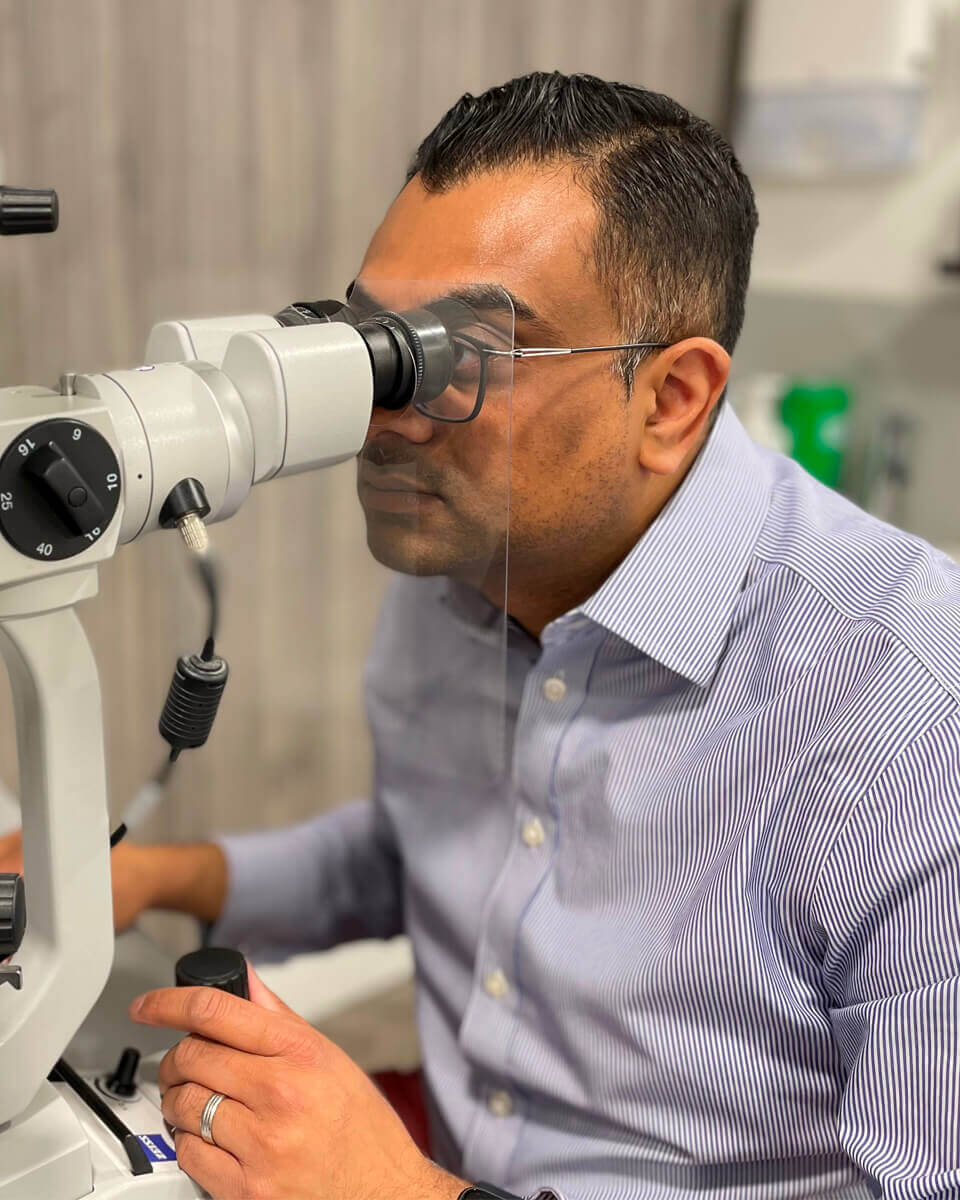
The same two optometrists, Mr Sachin Patel and Ms Anila Mistry, examine your eyes at every visit, using diagnostic equipment normally seen only in hospital and research settings.
Why patients choose Safarian and Simon
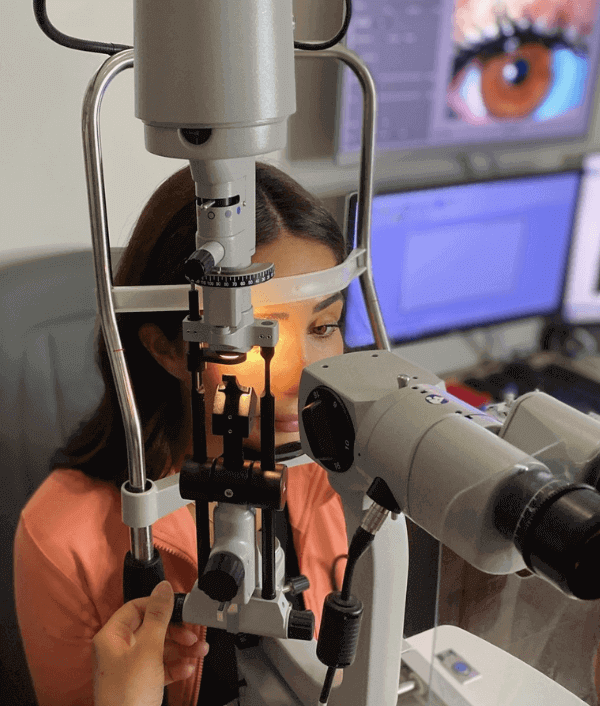
Why an eye examination is more than a sight check
A standard sight test will tell you whether you need glasses or contact lenses. A comprehensive eye examination checks the structural and functional health of your eyes from front to back, and can detect early signs of conditions including:
- Dry eye disease
- Glaucoma
- Macular degeneration
- Cataracts
- Diabetic retinopathy
- High blood pressure
- Retinal tears and detachments
- Visual stress and binocular vision imbalance
- Children’s vision problems including progressive myopia
- Migraine-related visual conditions
Most of these conditions are silent until they cause noticeable damage. The point of a private eye examination is to identify them before they do, while there is still meaningful intervention available.
What to expect at your appointment
A Safarian and Simon eye examination takes around 40 minutes. We do not rush, and specialist add-ons such as paediatric assessment, dry eye consultation or contact lens fitting take longer, which we will tell you in advance.
Our combination of advanced equipment and clinical experience means we can complete a genuinely comprehensive examination in that time, where some practices need an hour, often because parts of the process are delegated to less experienced staff. We are efficient without cutting corners. A typical comprehensive examination includes:
- A discussion of your history, lifestyle, work and visual needs
- An accurate prescription check using wavefront autorefraction
- A full eye health assessment, including digital retinal imaging
- Intraocular pressure measurement using the icare tonometer (no puff of air)
- Detailed retinal scanning
- A clear explanation of findings, with any treatment plans or referrals discussed in full
You will leave understanding what we found, why it matters, and what to do next. Recommendations take into account your work environment, screen time, sport, hobbies and visual demands, because the right eye care is not the same for a barrister, a builder and a Year 7 pupil.
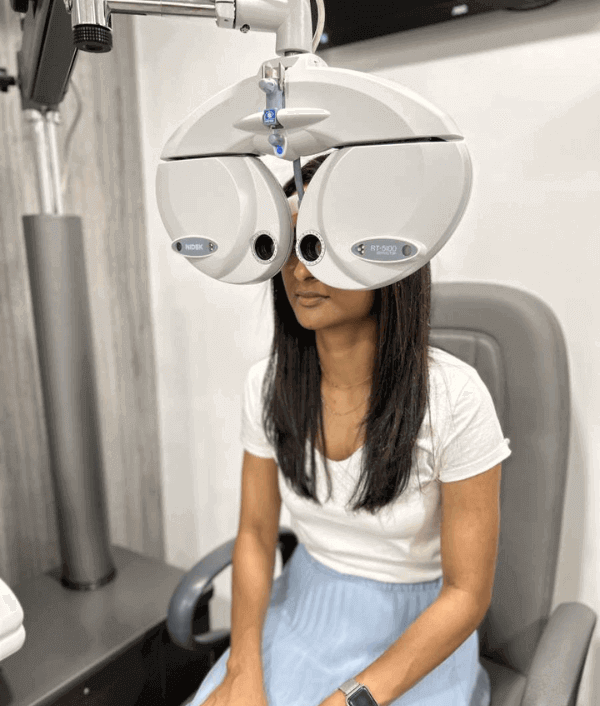
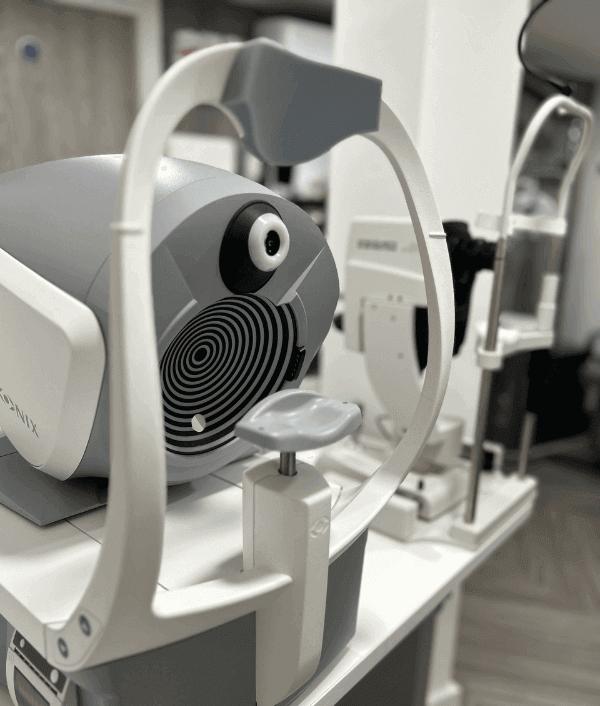
The technology that supports your examination
Our diagnostic equipment is the same standard used in hospital and research settings.
In brief, your examination is supported by Heidelberg Spectralis OCT scanning, California RGB ultra-wide retinal imaging, the Visionix VX120+ multi-diagnostic platform, the icare tonometer, Humphrey HFA visual field analysis, anterior segment OCT, and Cerium colourimetry for visual stress assessment.
To give a sense of what this means in practice: our ultra-wide retinal imaging captures up to 82 percent of the retina in a single image, compared with around 15 percent for a standard retinal photograph. That is more retina visible, in more detail, with less missed.
Most high-street opticians do not have access to this combination of equipment. Many that advertise “advanced” imaging use cheaper versions of these devices, often without the additional analysis modules that produce a properly diagnostic image. We do not.
Plenty of practices describe themselves as the ‘world’s most advanced’ or ‘cutting edge’, but those phrases rarely explain what they actually mean in practice. Equipment alone does not make an examination advanced. What matters is whether the optometrist reading your results knows how to interpret them, not just operate the machine, and that is where experience makes the difference.
Eye test FAQs
How often should I have an eye test?
The NHS recommends an eye test every two years for most adults, and more often when your optometrist advises. For private patients, we recommend annual examinations, and more frequently for children, contact lens wearers, anyone over 70, and anyone with diabetes, glaucoma, or a family history of either.
How long does an eye test take at Safarian and Simon?
Around 40 minutes for a comprehensive eye examination. Specialist assessments such as paediatric eye care, dry eye consultation, or complex contact lens fitting take longer, and we will tell you the expected duration when you book.
What is included in a private eye test?
What is visual stress, and do you test for it?
Visual stress, also called Meares-Irlen syndrome, is a perceptual processing condition that causes reading difficulties, headaches and visual discomfort from patterns of text. Estimates of prevalence range from 5 to 20 percent of the general population depending on the diagnostic criteria used. We screen for it using Cerium colourimetry, which most high-street opticians do not offer.
Do you offer NHS eye tests?
Do you do remote or video eye examinations?
Will I see the same optometrist next time?
How much does a private eye test cost?
Book an eye test in St John’s Wood
Safarian and Simon
72 St.John’s Wood High Street, London, NW8 7SH
020 7722 1917
info@ssopticians.co.uk
Opening Times
Monday – Friday: 9.30am – 6.00pm
Saturday: 9:30am – 5:30pm
Sunday/ Bank Holiday Closed
To book a private comprehensive eye examination, or an NHS sight test subject to eligibility and availability, contact the practice.